
Preparing for IT Disruption: A Layered Approach to Resilience
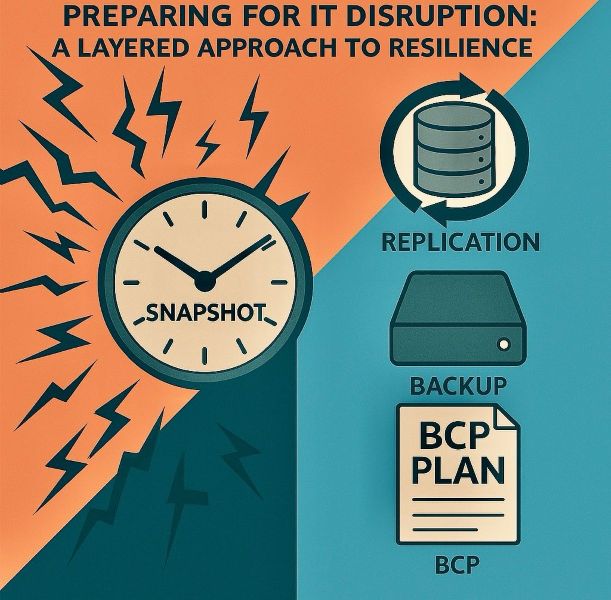
Preparing for IT Disruption: A Layered Approach to Resilience
Every day, I hear about businesses who have either been affected by an attack or are at risk of being severely disrupted.
But it’s not just those businesses that are affected – it’s the disruption and damage to their clients, their revenue, market confidence, and the reputation they have spent so much time building.
Whether it’s a cyberattack, hardware failure, software glitch, or simple human error, the impact can ripple across your entire environment: from servers to endpoints, cloud to on-premises systems.
That’s why resilience isn’t built on a single solution. It’s layered.
Each layer plays a distinct role in helping your business recover quickly, maintain continuity, and protect what matters most:
- Snapshots: Provide rapid rollback to a known-good state, often within minutes. Ideal for quick recovery from recent changes or issues.
- Backups: Offer long-term retention and recovery options, ensuring critical data is preserved over time.
- Replication: Enables high availability by mirroring systems to alternate locations, reducing downtime during major outages.
- Disaster Recovery: Ensures business continuity through well-designed and tested recovery plans that span business infrastructure, applications, and data.
Together, these layers form a business recovery strategy – a strategy that balances speed, integrity, and compliance, but without adding unnecessary complexity.
Being prepared isn’t just about prevention. It’s about having the confidence to know you can recover when you need to, no matter where disruption starts or what form it takes.
Even if you have a Business Continuity Strategy, it’s never too late to review your readiness to recover.