Bridging the Digital Skills Gap: From Mainframes to AI
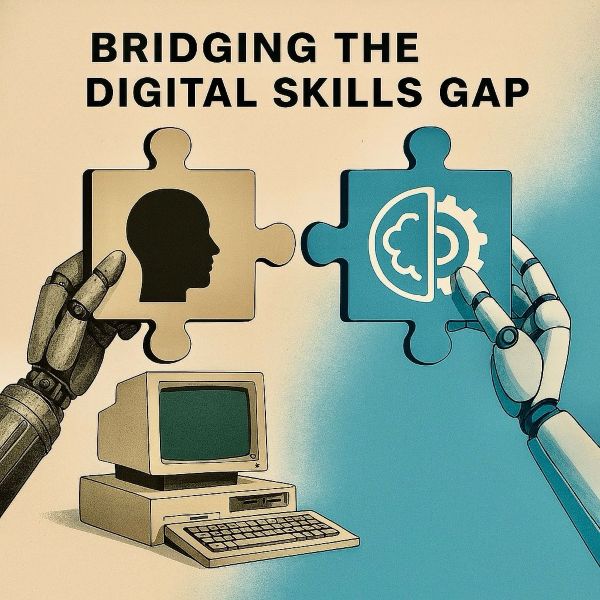
Bridging the Digital Skills Gap: From Mainframes to AI
When I started out, green screens, chunky keyboards, and mainframes were the norm. I still remember the excitement when the first IBM PC arrived at my company – those horizontal floppy disks felt like the future. It took a few years, but eventually PCs became mainstream, often with emulators to access mainframe systems.
We’ve all adapted to wave after wave of change. If there’s one thing I’ve learnt during this time, it’s this: you never really stop learning.
Today, the pace of change is breathtaking, and with it, the digital skills gap has become one of the biggest challenges facing organisations. The World Economic Forum predicts that by 2025, half of all employees will need reskilling. Meanwhile, 76% of IT employers say they’re struggling to find skilled talent in areas like cybersecurity, cloud, and AI.
Even mainframes – the systems I started with – are facing a talent shortage. Around 60% of specialists are over 50, and many are nearing retirement. Yet these systems still quietly power the global economy, trusted by banks, insurers, and Fortune 500 companies.
Succession planning isn’t just important; it has become urgent.
But behind every statistic are real people: curious, hardworking, and eager to develop their skills. Sometimes, they just need the right support. I’ve seen how a culture of continuous learning can change not just careers, but entire organisations.
Here’s what I’ve come to believe:
- Staying curious drives our need to keep learning.
- Mentorship and encouragement make change feel less overwhelming.
- Embracing change isn’t always easy, but it’s always worth it in the end – especially now, as AI reshapes how we live and work.
So I’ll leave you with a few questions to consider:
- How are you and your teams navigating the digital skills gap?
- What are you doing as a leader to support them?
- What lessons have you learned that others might benefit from?