
When leadership forgets to lead, foresight becomes a lifeline
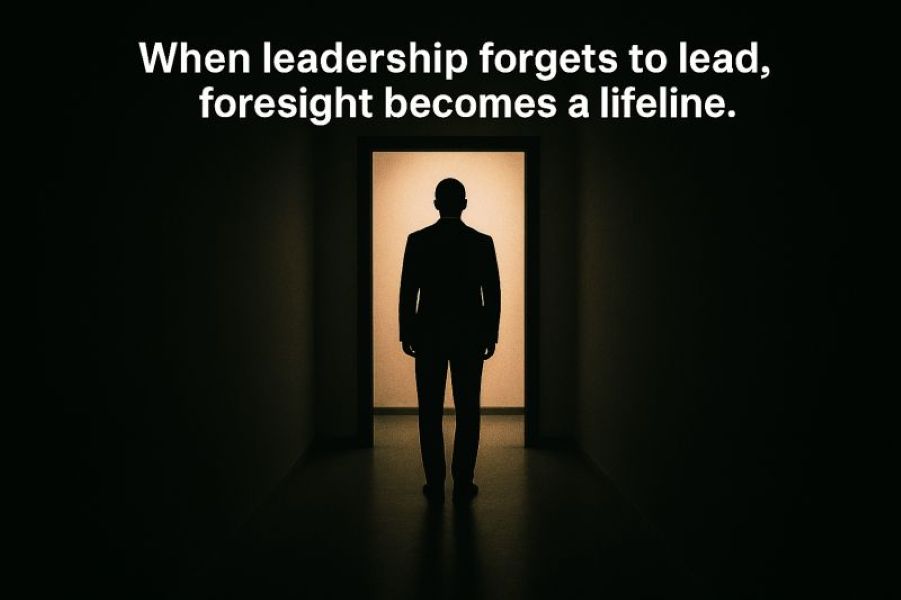
When leadership forgets to lead, foresight becomes a lifeline
An international technology summit was called by a Global CEO. There was no agenda and no direction given. Questions were raised beforehand, but there was no reply.
The senior leaders from around the world sat in a room and waited to be shown the agenda.
The CEO opened with:
“Welcome everyone, so, what shall we talk about over the next two days?”
There was silence. Surely, there was a plan. Was this a request for any other business (AOB) on an agenda? Unfortunately, not.
One leader, from experience, had seen this before and quietly prepared.
This leader had asked their team to build a series of presentations in advance, just in case.
Their team had questioned the need:
“Have we been asked for any presentations?”
The leader simply said:
“No, but you need to trust me. I’ve been here before. We need to be prepared to step in.”
Although there was disbelief that this could possibly happen, they trusted their leader’s judgement.
When the silence hit the room, this leader stepped forward:
“If it helps, my team have prepared a few presentations that we could use to drive discussion over the next 2 days?”
When leadership lacks clarity, uncertainty becomes the culture, and foresight becomes a lifeline.
The CEO thought this was a great idea. The running order was discussed and agreed. There was at last relief in the room. Everyone relaxed.
The Summit was saved. It was a real success, and the CEO was very happy.
The CEO later said:
“What a great summit, I’m really impressed. The presentations almost look like they were planned and worked on together.”
They were! The leader’s instinct was right. Their team had helped ensure the success on the day.
This demonstrates a key lesson:
Leadership isn’t always loud.
It’s the quiet voice that says, “Let’s be ready.”
It’s the foresight to prepare when no one asks.
It’s the courage to act when no one else does.
Because sometimes, the most powerful contribution is the one no one asked for.